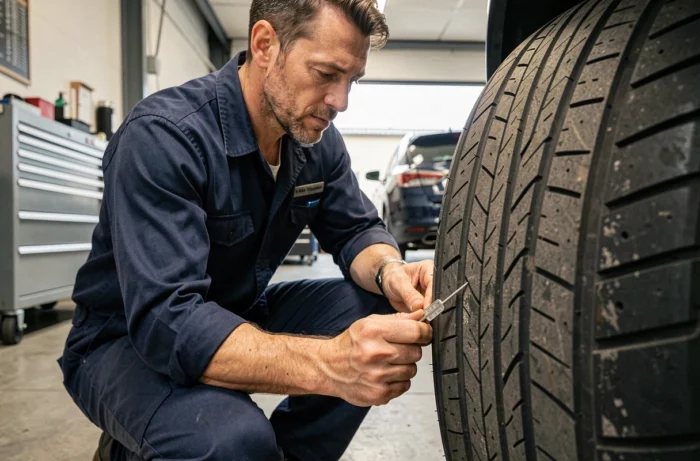
Since November 1, 2024, the M+S marking alone is no longer sufficient to comply with the Mountain Law: only the 3PMSF symbol (three-peak mountain with snowflake) is recognized as compliant winter equipment. An all-season tire without this symbol on its sidewall no longer has any regulatory standing in the areas concerned. This change affects tire choices, whether you drive a car or ride a motorcycle.
3PMSF tires or chains in the trunk: choosing for occasional mountain trips
Drivers who head to a ski resort only a few days a year face a binary choice: fit their vehicle with four 3PMSF-marked tires year-round, or keep summer tires and carry approved chains or snow socks in the trunk.
The Mountain Law allows the second option. In an area subject to the winter equipment requirement, suitable chains or snow socks can be carried on board without being fitted. The regulatory distinction comes down to road signs: a B26 sign requires chains to be fitted, regardless of the type of tires installed. So even drivers with compliant 3PMSF tires may be required to fit chains on certain routes.
For anyone driving through a Mountain Law area two or three times each winter without regularly taking snow-covered mountain passes, keeping metal chains in the trunk is a more modest investment than buying four 3PMSF all-season tires. However, fitting them at the roadside in cold weather is still a chore, and chains damage dry asphalt. The range available at https://www.auto-moto-pneu.net lets you compare the two options based on your vehicle and original tire fitment.

All-season tires: the practical limits of the compromise
All-season tires appeal to drivers with the promise of a single set of tires for the whole year. We find that this versatility comes at a measurable technical cost outside moderate temperature ranges.
On deep snow or ice, an all-season tire’s rubber remains stiffer than that of a dedicated winter tire, whose compound is designed to stay flexible in low temperatures. Braking distances increase significantly when the mercury drops well below freezing. Conversely, in hot summer weather, the same softer compound wears faster than a summer tire and slightly reduces handling at high speeds.
All-season tires are suitable for regions where snow is occasional and winter temperatures are moderate. For drivers based in lowland areas who only encounter snow on occasional trips, the question comes back to the choice outlined above: permanent 3PMSF tires or chains on board.
Check the marking on the tire sidewall
A tire marked M+S (Mud and Snow) without the 3PMSF symbol has not been compliant since November 2024. Before buying, check the sidewall for the symbol itself. Some mid-range all-season models carry the M+S marking but not 3PMSF, making them invalid as proof of compliance in a Mountain Law area.
Motorcycle tires: selection criteria specific to two-wheelers
Choosing a motorcycle tire is not the same as choosing a car tire. The contact patch is dramatically smaller, and the tire leans into corners, putting far more stress on the sidewalls than a car tire experiences.
- A sport-touring tire offers a good balance of cornering grip and durability for everyday road use, and warms up relatively quickly.
- A trail tire must handle the weight of luggage on long journeys while maintaining adequate traction on tracks or trails, requiring a very different profile and tread pattern from a road tire.
- A track tire (slick or semi-slick) increases grip at high temperatures but becomes dangerous on public roads in cool or wet weather because it lacks grooves to disperse water.
Radial construction now dominates the road motorcycle tire market, offering better stability at high speeds and more even heat distribution than bias-ply construction, which is still used on some cruisers and older bikes.
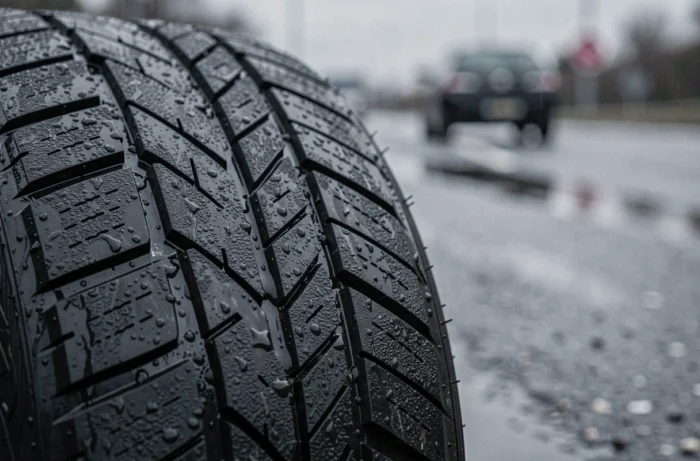
Motorcycle tire life and wear indicators
Motorcycle tires wear unevenly depending on riding style. Highway riders wear down the center of the tread well before the sidewalls, while riders on winding country roads see the opposite. Tread wear indicators (TWI) remain the best guide for deciding when to replace a tire, but its age matters too: rubber hardens over time even when the tire is not being used, reducing grip in ways that are not visible.
Speed rating and load index: two markings not to overlook
Every tire sidewall displays a code such as 91V or 73W. The number indicates the tire’s maximum load capacity, while the letter indicates its maximum permitted speed.
Fitting a tire with a speed rating lower than the one specified by the vehicle manufacturer is prohibited at the roadworthiness test. The same rule applies just as strictly to motorcycles. An insufficient load index causes excessive tire deformation under the weight of a loaded vehicle, accelerating wear and increasing the risk of a blowout.
Checking the manufacturer’s plate (on the driver’s door of a car, or in the owner’s manual for a motorcycle) is the most reliable step before placing an order. The markings on the sidewall of the tire currently fitted are only relevant if the original fitment has never been changed.
Choosing a tire rarely comes down to size and price alone. Between 3PMSF regulatory compliance, your region’s actual climate, vehicle type, and performance ratings, each factor rules out certain options. It is better to narrow the selection to three or four compatible models, then compare durability and wet-road performance—the two criteria that matter most in everyday driving.