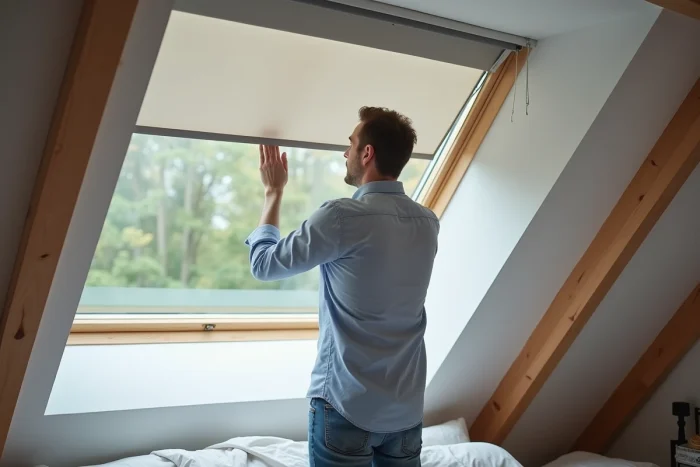
A blackout blind from Velux never breaks down dramatically. Often, it all starts with a less smooth movement, light filtering in where total darkness reigned just yesterday. The attachment method varies from model to model, depending on the year of manufacture: some blinds, stubborn or temperamental, refuse to be dismantled without resistance. Sometimes, no part seems broken, yet the mechanism falters. The official manuals remain lacking in detail regarding the subtleties that make the difference between a smooth replacement and a frustrating session.
Why replace a Velux blackout blind: what to know before getting started
Changing a blackout blind on a Velux roof window is not just a matter of aesthetics. It’s about regaining control over light, thermal comfort, and privacy in the attic. Over time, the fabric stretches, colors fade, light gains ground, and mechanisms lose their flexibility. These discreet signs eventually alter the quality of life under the roofs.
A tired Velux blind affects the room’s temperature, accelerates overheating during warm days, and allows heat to escape as soon as the first cold sets in. When blackout is no longer guaranteed, the entire thermal performance of the glazing collapses. Changing a Velux blackout blind allows you to regain control over light and insulation that you originally relied on.
Before getting started, one step is essential: check the model of your Velux window. The reference, engraved on the identification plate, guides the choice of compatible products. An ill-fitting blind cannot be mounted or adjusts poorly, complicating the installation even before starting. If a roller shutter complements your setup, examine it as well: a simultaneous failure may indicate a structural issue with the roof window.
Recent blackout blinds bring their share of innovations: more efficient fabrics, easier operation, increased resistance to humidity. Take the time to choose a version suited to the room, whether it’s a bedroom, office, or relaxation area, for a tailored comfort. Investing in a new generation Velux blind is investing in the serenity and longevity of the entire Velux blackout blinds.
What tools and precautions for a stress-free dismantling?
Before taking action, it’s better to prepare the ground. Clear the floor space, secure your workspace under the roof window. A sturdy chair or a small step stool will help you reach the top of the frame without risking a fall or awkward movement. Gather the necessary tools, usually within reach at home: a suitable screwdriver, a cutter to remove any seals, and a container to avoid losing screws.
The housing of the blind, the central piece, should be removed carefully. On most models, it is clipped to the window frame. Start by locating the lower attachments that keep the fabric taut; gently unclip them without forcing, to avoid damaging the side profiles or the clipping system of the window frame (some recent models are particularly sensitive to twisting).
To limit unpleasant surprises, it’s best to protect the glazing: a cardboard or sheet placed over the glass will suffice against accidental scratches. Keep the fasteners together in a bag or box to facilitate reassembly. Each removed piece should remain identifiable; one rarely celebrates having lost a small screw in the carpet.
The watchword: patience and method. Good lighting, preferably natural, helps to spot the attachments and maneuver within the frame. If the window is wide or if the product offers strong resistance, don’t hesitate to ask for a helping hand. Following the order of steps will spare you many troubles and ensure a clean dismantling, ready to welcome the brand new blind.
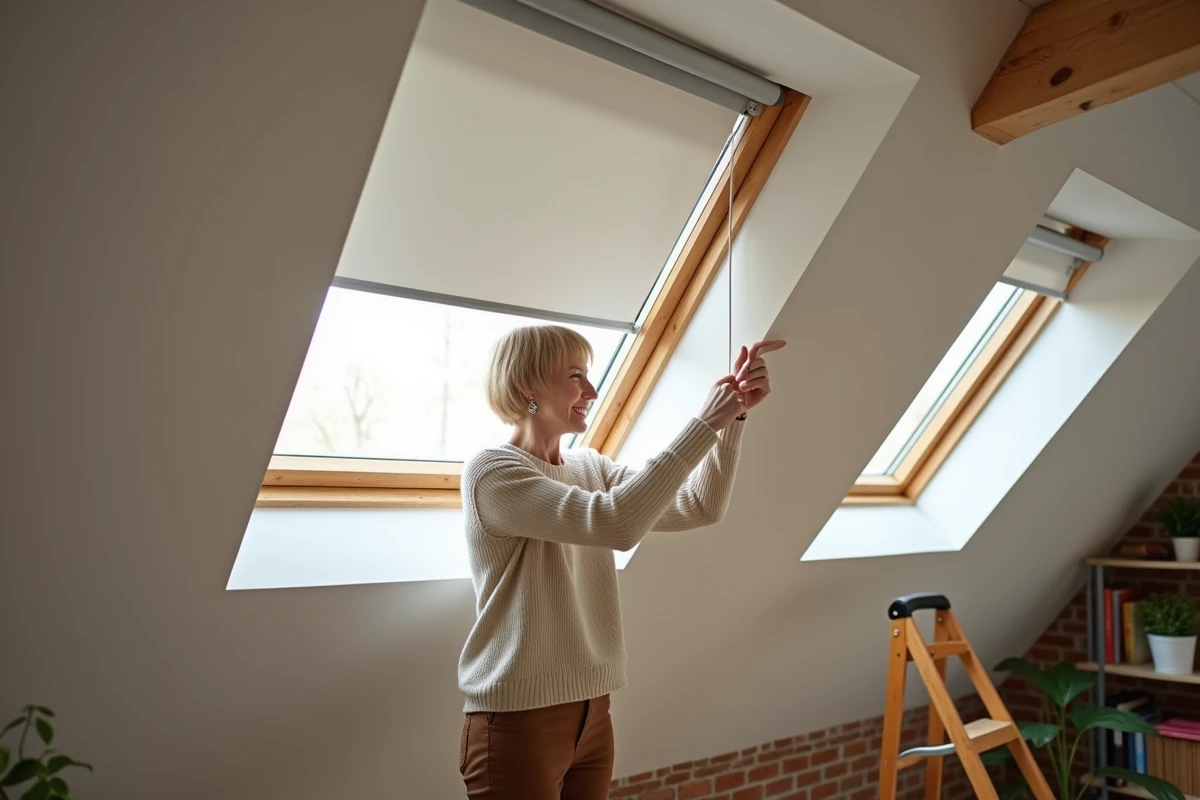
Change a Velux blackout blind step by step, with ease
Preparing the installation of the new Velux blackout blind
Before installing the Velux blackout blind just out of the box, make sure the roof window is clean and clear. Dust the frame, remove any remnants of the old blind. Take out all the elements from the new kit for a quick check: presence of fasteners, correct tension of the fabric, nothing should be missing for a smooth assembly.
Installation: every move counts
The installation begins with inserting the housing into its notches on the roof window. A click signals its proper placement; the precision of the equipment makes the difference. Continue with the side profiles, essential for guiding the fabric and preventing light from passing through. Screw without forcing, using each piece from the kit. The lower attachments come last: they tension the blackout blind for total light blockage.
Here are the points to check at each step:
- Check the alignment of the blind with the roof window frame
- Secure the side profiles firmly
- Engage the fabric into the rails up to the lower attachments
- Test the movement of raising and lowering
The installation should be gradual, without jolts. Some models require only a screwdriver, while others need an Allen key. Monitor the mobility of the interior Velux blind: it should slide effortlessly. Once everything is assembled, perform several opening and closing tests. When the light fades away completely, the blackout blind has found its place. Comfort, in turn, settles in permanently under the roofs, ready to face the next wave of sunshine… or the darkest night.