A first tandem parachute jump that leads to a fainting spell, a white-water outing without prior briefing, a via ferrata started with a poorly adjusted harness: these situations are encountered every season in France. Extreme sports attract with the adrenaline rush and the promise of pushing one’s limits. But between gradual skill development and raw exposure to danger, the line is quickly crossed when starting without a framework.
Risk threshold and skill progression: the distinction beginners miss
Pushing one’s limits, in the field, means increasing technical skill before increasing exposure level. The two are often confused when starting extreme sports. Jumping from a plane or racing down a torrent does not require raw courage: it demands mastering precise movements in an environment one has learned to read.
The difference between a progressing practitioner and one who exposes themselves unnecessarily comes down to a concrete point: the ability to assess one’s own margin of error. In climbing, for example, moving from a route rated 5b to a 6a does not present the same stakes depending on whether one is climbing indoors, on a bolted cliff, or on a multi-pitch route. The context changes the real risk, not just the technical difficulty.
You can access the Ultra Sport site to consult practical sheets by discipline and assess the appropriate entry level for your physical profile.
Recent guides on extreme sports in France emphasize progressive preparation and risk management more than the mere pursuit of thrills. This editorial shift reflects a ground reality: training structures increasingly filter beginners based on their physical condition and prior experience.
Certified equipment and specialized insurance: two common blind spots
It is often thought that the equipment provided by a service provider is sufficient. In practice, the compliance of personal protective equipment depends on regulation (EU) 2016/425, which has strengthened certification requirements for PPE used in high-risk activities. A climbing helmet, a via ferrata harness, or a wingsuit fall under specific categories.
Checking for the CE marking and the expiration date of the equipment (strap, carabiner, rope) is part of the reflexes to acquire even before stepping foot on a site. Feedback varies on this point depending on the providers, but a serious center will spontaneously show the control sheets of its equipment inventory.
Insurance: what your contract covers (or not)
The extreme sports insurance market has structured around very specific practice exclusions. Several specialized insurers now display closed lists of covered disciplines, rather than a general promise of all-risk coverage. Before booking a parachute jump, a freestyle skiing session, or a canyoning descent, one must:
- Check if the discipline is specifically listed in the coverage guarantees of your contract, not just in a generic “sports” category
- Verify the coverage limit for helicopter evacuation, often capped well below the actual cost in the mountains
- Ask if guided practice and autonomous practice benefit from the same level of coverage (the answer is often no)
A multi-risk home insurance policy almost never covers extreme sports. A specific extension or dedicated contract is required.
Three accessible disciplines in France for a first field contact
Rather than a list of ten activities briefly mentioned, let’s focus on three disciplines that offer a real gradual skill progression and remain accessible without exceptional physical condition.
Via ferrata: the best sensation/safety ratio for beginners
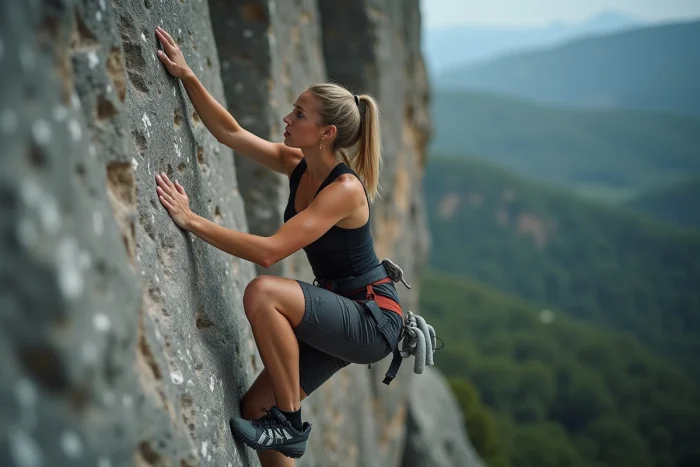
The via ferrata combines climbing, verticality, and cable routes. There are routes classified from K1 (easy) to K6 (extremely difficult) in most French mountain ranges. A beginner starts at K2 or K3 with a qualified instructor and progresses over a few sessions to more challenging aerial routes. Guidance by a high mountain guide remains the standard for a first outing.
Freestyle skiing: step-by-step progression in the snowpark
Freestyle skiing is not limited to the acrobatic tricks seen in competitions. In resorts, snowparks offer modules classified by level (S, M, L, XL). One starts on a small jump at low speed and works on landing before attempting rotation. Snowboarding follows the same step-by-step logic. The key: never attempt a module above the one you have mastered on landing, not on takeoff.
Tandem parachute jump: the free fall experience without technical autonomy
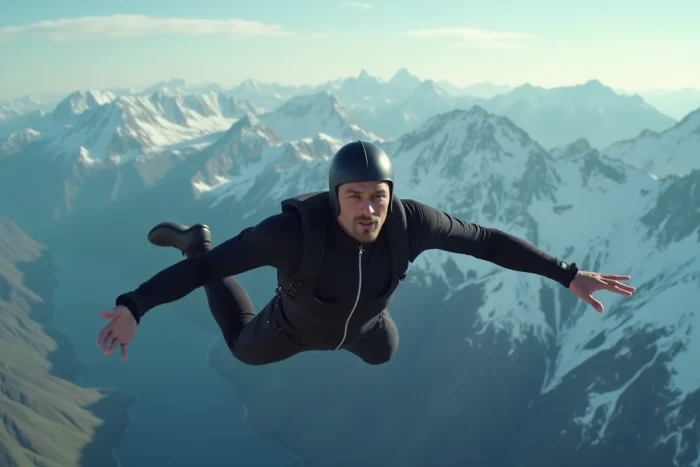
The tandem jump remains the most common entry point to experience the thrills of free fall. You are attached to an instructor who manages the entire procedure. The experience lasts a few minutes, but it allows you to feel concretely what the body goes through in an extreme situation. To move towards autonomy (PAC, complete training), one must then accept a course of several guided jumps.
Seasonality and site choice: adapting discovery to local terrain
Recent content on extreme sports in France shows a clear trend: the offer is becoming localized and aligned with the seasons. Canyoning is not practiced in April in the Pyrenees as it is in July in the Verdon. Water temperature, flow rate, and residual snow cover radically change the risk level of the same activity.
Before booking, checking the site’s opening period, the weather conditions for the week, and the water level (for aquatic activities) avoids most unpleasant surprises. Experienced athletes adapt their training to current conditions, not the other way around.
- Climbing on cliffs: prefer spring and autumn to avoid heat that softens holds and reduces grip
- Freestyle skiing and snowboarding: December to March depending on altitude, checking the actual opening of the snowpark
- Parachute jumping: feasible almost all year round, but jump slots depend on wind and cloud cover
Pushing one’s limits in extreme sports involves concrete choices: verified equipment, suitable insurance, a site consistent with one’s level and the season. The challenge is not to jump the highest or the fastest, but to build a progression that lasts over time.